 88222 82888

How to Check Cement Quality Before You Buy: A Practical Guide
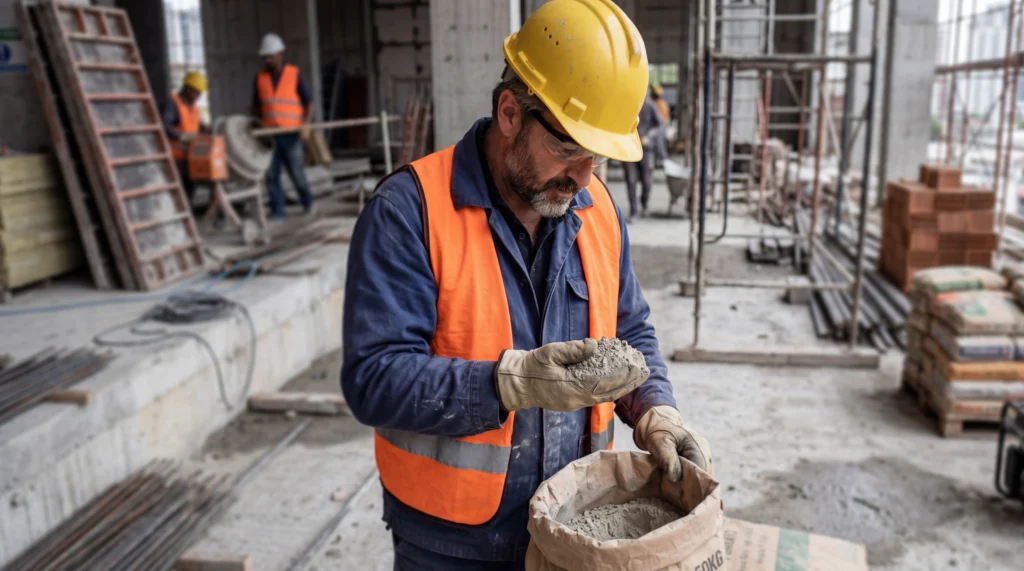
Cement is the binding component of concrete and plays a crucial role in making any structure stronger. Using poor‑quality cement can significantly reduce the strength and durability of your house or construction project. With so many cement brands available in the market, choosing the best quality cement for your construction project is essential.
Choosing the right cement is one of the most important decisions you make before starting any construction work, because the cement you use directly impacts the durability and strength of the structure.
In this blog will explain how to check the cement quality and choose the best cement for your construction project.
Cement Composition
Before we move on to checking the cement quality, let’s first understand what cement is made of.
Cement is primarily made from limestone and clay. This mixture is heated in a very hot kiln, forming hard lumps called clinker. The clinker is then crushed into a fine powder, and a small amount of gypsum is added during grinding.
This process produces the familiar grey powder, which is then packed in bags and made ready for sale.
Assessing the Quality of Cement
Check 1 - Look at the Packaging
The first and most basic indicator of cement quality is its packaging. The look and feel of the bag can already tell you a lot. Each important detail should be clearly mentioned on the bag.
Here’s what to check:
- Brand name and logo: The brand name and logo should be clearly visible and properly aligned on the bag.
- Type and grade of cement: The type and grade should be mentioned, for example: OPC 53 grade, OPC 43 grade, or PPC.
- ISI mark: The ISI mark is a sign of standard quality, purity, and strength. Always check whether the cement bag has the ISI mark printed on it. Avoid buying cement that does not carry this mark.
- Condition of the bag: The bag should be properly stored, intact, and well‑sealed to protect the cement from moisture.
- No damaged bags: Never accept damaged, torn, or re‑stitched bags of cement.
By carefully examining the packaging, you can quickly filter out poor‑quality or mishandled cement before making your purchase.
Check 2 - Verify the Manufacturing Date and Storage Time
Like every product, cement also has a manufacturing date, but its expiration date is quite different from any other product; it doesn’t technically expire. The strength of cement degrades after a span of three months.
It is best advised to use the cement within three months of manufacturing. After three months, the cement starts to absorb moisture, and lumps are formed due to hydration.
Despite how you store it or conserve it, it will degrade upto 30% after 3 months, and respectivily it’s strength falls. To know more, read our detailed guide on whether cement expires.
Check 3 - Simple On-the-Spot Tests You Can Do
The quality of cement can also be checked with its texture, color, smell, and in water. Let’s see how we can check the cement quality on-site in different ways.
a) Lump Test: The lump test is a simple method used to assess the quality of cement. Fresh cement should be smooth and free from hard lumps, which typically form due to moisture exposure and can reduce strength.
To check the cement quality, gently press the cement bag and check for any hard lumps inside, or if needed, take a small sample to check the cement. Ensure it is lump-free and feels smooth in touch; don’t buy cement older than three months or have lumps.
Why Lump-Free Cement Matters
When cement absorbs moisture, it undergoes partial hydration, leading to reduced bonding strength. This can result in weaker concrete and long-term structural issues.
b) Color Test: The color of cement is a quick visual indicator of its quality. Good quality cement typically has a uniform grey color with a slight greenish shade, which reflects proper composition and manufacturing. Any noticeable variation, such as uneven color or excessive darkness, may indicate impurities or poor-quality raw materials.
c) Hand Feel and Fineness Test: When rubbed between fingers, fresh cement should feel smooth and fine, not gritty or coarse. A gritty texture may indicate the presence of impurities or improper grinding,
which can affect the strength and finish of concrete. A simple check using a fine cloth or sieve should leave minimal residue, confirming good fineness and proper processing.
d) Temperature Test: Fresh cement generally feels slightly cool when touched, even when inserted into a bag. This coolness is a natural property and indicates that the cement has not yet reacted with moisture. If the cement feels warm or contains lumps, it may have undergone partial hydration due to moisture exposure, which can reduce its effectiveness.
e) Float Test (for demonstration at home/site): When a small quantity of cement is placed in water, good quality cement tends to float briefly before gradually sinking. This behavior indicates proper fineness and composition. However, if the cement sinks immediately in clumps, it may suggest the
presence of moisture or compromised quality, which can affect its performance in construction.
Storage Tips After You Buy
Proper storage is critical because cement is highly sensitive to moisture, and even minimal exposure can trigger partial hydration, reducing strength.
- Store cement bags at least 150-200 mm (6-8 inches) above ground level on a dry platform
- Keep bags away from walls (minimum 300 mm gap) to avoid moisture transfer
- Stack in a covered, dry, and well-ventilated area
- Use bags on a first-in, first-out (FIFO) basis to prevent ageing
- Avoid storing cement for more than 2-3 months, as strength gradually declines
- Cover stacks with waterproof sheets during humid or rainy conditions
When to Definitely Reject Cement
Reject cement immediately if any of the following signs are observed:
- Hard lumps that do not break easily → indicate moisture exposure and pre-hydration
- Old manufacturing date (typically beyond 3 months) → reduced binding strength
- Torn, damaged, or re-stitched bags → risk of contamination or moisture entry
- Missing standard mark (e.g., ISI mark), grade (OPC/PPC), or manufacturer details
- Cement feels warm, damp, or excessively clumpy
Key point: Replacing a few cement bags is far cheaper than repairing cracks, leaks, or structural damage later.
Good quality cement is the foundation of a strong and durable structure. Vasuki Cement is engineered for consistent performance across OPC, PPC, PSC, and GGBS grades, so the quality you verify on the bag is the quality you get on site. Simple checks like texture, color, and storage condition can help avoid major construction issues. Before using cement, take a few extra minutes to verify its quality. This small effort can prevent long-term damage and ensure better performance of your building.
FAQs
How do you check cement quality before buying?
What does the ISI mark on a cement bag indicate?
What is the lump test for cement quality?
What is the float test for cement?
When should cement be rejected outright?
Looking for Cement Supply or Dealership?
Partner with us for consistent quality, competitive pricing, and dependable delivery.
Looking for Cement Supply or Dealership?
Partner with us for consistent quality, competitive pricing, and dependable delivery.