 88222 82888

10 Innovative Ways Cement Companies Are Reducing Their Carbon Footprint
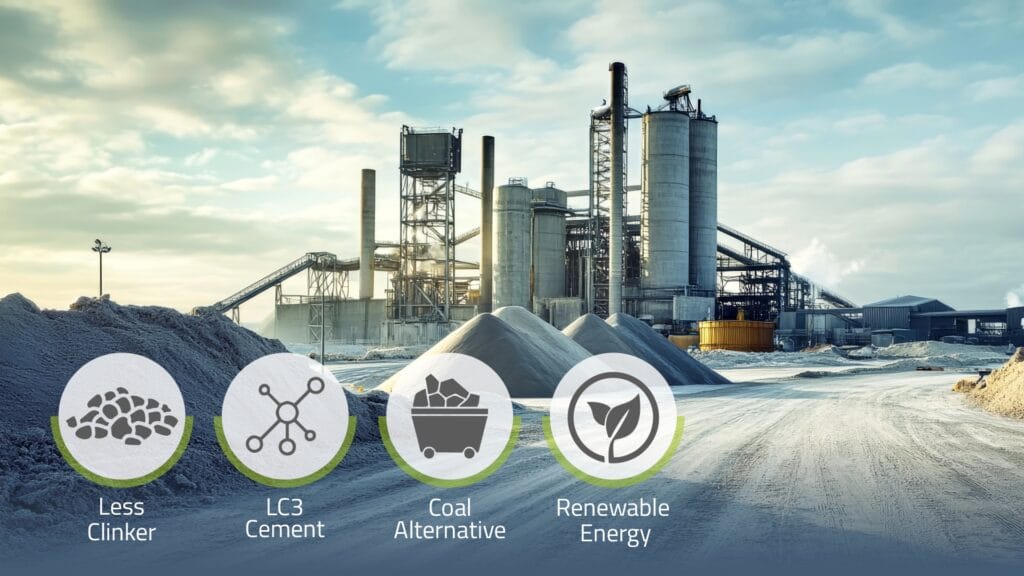
The global construction industry is evolving rapidly, and sustainability is no longer optional. Cement manufacturing, one of the backbone industries of infrastructure development, has traditionally been associated with high carbon emissions. According to the World Economic Forum, cement production is responsible for approximately 8% of worldwide CO₂ emissions, making it one of the most carbon-intensive industries on the planet.
At Vasuki Cement, we believe that building for India’s future means building responsibly. That is why we closely follow and align with the innovations reshaping how cement is produced, and why we are committed to ensuring that our cement products meet the standards. From low-carbon raw material choices to renewable energy integration and AI-driven efficiency.
As governments, builders, and consumers increasingly prioritize sustainable construction materials, the cement industry is entering a transformative phase, one driven by innovation, environmental responsibility, and long-term resilience.
In this article, we walk through 10 of the most impactful ways companies are working to reduce the cement carbon footprint, without compromising the strength, durability, or performance the industry demands.
Why Carbon Emissions from Cement Are So Difficult to Eliminate
Before diving into the solutions, it helps to understand why reducing the cement carbon footprint is structurally hard. Unlike most industries where emissions are primarily energy-related, cement has a more fundamental problem. The majority of its CO₂ comes from two distinct sources:
- Calcination Process
Limestone (calcium carbonate) must be heated to extremely high temperatures to produce clinker. This chemical reaction releases CO₂ as a direct byproduct, and it is unavoidable with conventional production. Calcination alone accounts for roughly 60% of total cement manufacturing emissions. - Fuel Combustion
Cement kilns require temperatures exceeding 1,450°C, traditionally achieved through coal and fossil fuel combustion. This accounts for the remaining 40% of direct emissions.
Research shows that more than 60% of cement emissions are process-related emissions from clinker production, while the remaining emissions come from fuel combustion and electricity use.
Addressing the full cement carbon footprint requires multiple strategies working simultaneously.
01
Reducing the Clinker Factor
One of the most impactful and immediately deployable strategies is reducing the proportion of clinker in cement. Clinker is the most carbon-intensive component of the product, and every percentage point of clinker replaced translates directly into a measurably lower cement carbon footprint.
Common supplementary cementitious materials (SCMs) used as clinker substitutes include:
- Fly ash
- Ground granulated blast furnace slag (GGBS)
- Silica fume
- Calcined clay
- Limestone blends
Studies indicate that reducing the clinker-to-cement ratio is one of the most efficient and cost-effective decarbonization strategies for the cement industry.
This approach not only lowers carbon emissions but also improves long-term durability and performance in certain applications.
02
Adoption of Low-Carbon LC3 Cement
Limestone Calcined Clay Cement (LC3) is emerging as a breakthrough innovation in green cement technology.
By partially replacing clinker with calcined clay and limestone, LC3 reduces CO₂ emissions by 30-40% compared to conventional Ordinary Portland Cement. Multiple peer-reviewed life cycle assessments confirm this range, and the LC3 project website cites savings of up to 40%.
The technology is especially well-suited to India because it:
- Uses locally available raw materials
- Requires less energy during production
- Reduces manufacturing costs
- Maintains high structural performance
India is already witnessing adoption of LC3 cement in large infrastructure projects, including airports and sustainable urban developments.
As sustainable construction grows, LC3 cement could redefine the future of eco-friendly cement manufacturing in India.
03
Using Alternative Fuels Instead of Coal
Traditional cement plants rely heavily on coal to power kilns. Modern manufacturers are now replacing fossil fuels with alternative energy sources such as:
- Biomass
- Refuse-derived fuel (RDF)
- Industrial waste
- Agricultural waste
- Waste tires
- Green hydrogen
Alternative fuels reduce dependence on coal while helping manage industrial and municipal waste more efficiently.
Research highlights that biomass, renewable natural gas, and green hydrogen can significantly reduce emissions from clinker manufacturing.
Several cement plants globally are also using solid recovered fuel (SRF) systems capable of replacing 60–70% of conventional coal usage.
This transition represents a major step toward cleaner and more sustainable cement production.
04
Renewable Energy Integration in Cement Plants
Modern cement companies are increasingly investing in renewable energy infrastructure to reduce dependence on fossil-fuel-generated electricity.
Common renewable energy initiatives include:
- Solar power plants
- Wind energy systems
- Waste heat recovery systems
- Electrified production processes
Renewable electricity helps reduce Scope 2 emissions associated with cement manufacturing.
Recent developments confirm that fully electrified clinker production is now technologically feasible. As renewable energy costs continue to fall, electrified manufacturing is expected to become a defining feature of forward-looking cement plants and a key driver in reducing the cement carbon footprint at scale.
05
Carbon Capture, Utilization, and Storage (CCUS)
Because calcination releases CO₂ as a chemical reaction, there is a ceiling to how much fuel switching and efficiency improvements alone can achieve. CCUS addresses the cement carbon footprint at the source, capturing emissions directly from kiln flue gases before they enter the atmosphere.
CCUS technologies work by:
- Capturing CO₂ from flue gases
- Compressing and transporting the carbon
- Reusing or permanently storing it underground
Industry experts consider carbon capture crucial because process-related emissions cannot be eliminated entirely through fuel switching alone.
Major global cement companies are already investing in large-scale CCS facilities capable of capturing hundreds of thousands of tons of CO₂ annually.
Although currently expensive, carbon capture is expected to become increasingly viable as climate regulations strengthen worldwide.
06
Artificial Intelligence and Smart Manufacturing
AI is transforming how cement plants operate, and the efficiency gains translate directly into a lower operational carbon output. Modern AI-powered systems help plants optimize:
Modern AI-powered systems help plants optimize:
- Fuel consumption
- Kiln temperature control
- Emission monitoring
- Raw material blending
- Predictive maintenance
- Logistics management
Machine learning frameworks are now capable of forecasting emission spikes and improving nitrogen oxide control while preserving clinker quality.
For an industry where marginal efficiency gains compound at enormous scale, AI is becoming one of the most practical and accessible tools for reducing the cement carbon footprint without capital-intensive infrastructure changes.
07
Waste Heat Recovery Systems
Cement kilns generate enormous amounts of heat during production. Traditionally, much of this energy was lost.
Today, advanced cement plants are installing Waste Heat Recovery Systems (WHRS) to convert excess heat into electricity.
Benefits include:
- Lower energy consumption
- Reduced electricity costs
- Improved energy efficiency
- Lower greenhouse gas emissions
Waste heat recovery helps cement plants reduce their dependence on external power sources while improving operational sustainability.
For energy-intensive industries like cement manufacturing, such efficiency improvements can create substantial environmental and economic benefits simultaneously.
08
Developing Carbon-Negative Cement Technologies
Some of the most forward-thinking companies are moving beyond reduction and targeting carbon-negative cement: technologies that actively remove or permanently store more CO₂ than they emit. If successful at scale, these approaches could fundamentally invert the traditional cement carbon footprint rather than simply shrinking it.
Examples include:
- CO₂ mineralization in concrete
- Carbon-injected concrete curing
- Carbon nanotube cement technologies
- Bio-based cement alternatives
Innovative startups are developing systems that inject captured CO₂ directly into concrete mixtures, permanently storing carbon inside construction materials.
Researchers are also exploring methods to transform cement emissions into commercially valuable materials like carbon nanotubes.
While many of these technologies are still scaling, they represent a powerful glimpse into the future of sustainable construction materials.
09
Sustainable Raw Material Sourcing
Cement companies are increasingly focusing on responsible sourcing of raw materials to reduce environmental impact.
This includes:
- Using industrial byproducts
- Recycling construction waste
- Reducing virgin material extraction
- Utilizing low-grade limestone
- Incorporating recycled aggregates
Sustainable sourcing reduces ecological degradation while promoting circular economy practices.
By reusing industrial waste streams, manufacturers can lower emissions and conserve natural resources simultaneously.
This shift also aligns with growing green building certification standards and environmental regulations worldwide.
10
Green Building Collaboration and Sustainable Infrastructure
No single manufacturer can reduce the cement carbon footprint in isolation. Meaningful change requires alignment across the entire construction value chain.
Cement companies are now partnering with:
- Green building councils
- Infrastructure developers
- Architects
- Government agencies
- Sustainable construction consultants
Together, they are promoting:
- Eco-friendly building standards
- Low-carbon infrastructure
- Net-zero construction projects
- Sustainable urban development
Governments and industries worldwide are encouraging the adoption of low-carbon materials through procurement policies, sustainability certifications, and climate-focused regulations.
This collaborative approach is accelerating the transition toward greener infrastructure.
The Future of Sustainable Cement Manufacturing
The cement industry is entering a decisive decade. Rapid urbanization, infrastructure growth, and climate concerns are creating pressure for cleaner construction materials. At the same time, innovation is opening opportunities that were unimaginable just a few years ago.
Future trends likely to dominate the industry include:
- Fully electrified cement plants
- Hydrogen-powered kilns
- Widespread carbon capture adoption
- AI-controlled smart manufacturing
- Circular economy integration
- Carbon-negative construction materials
The companies that adapt early will not only reduce environmental impact but also gain long-term business advantages in a sustainability-driven market.
Low-carbon cement is no longer just a niche innovation it is becoming the future standard of responsible construction.
How Vasuki Cement Contributing to a Greener Future
As India continues to witness large-scale infrastructure growth, the role of responsible cement manufacturing becomes increasingly important.
Vasuki Cement understands that modern construction demands strength and durability, combining with sustainability and environmental responsibility.
By embracing energy-efficient manufacturing, exploring greener production practices, supporting sustainable infrastructure, and aligning with the future of low-carbon cement innovation, Vasuki Cement is contributing meaningfully toward building a stronger and more sustainable India.
Conclusion
The global cement industry is undergoing one of the most significant transformations in its history. From clinker reduction and alternative fuels to AI-powered optimization and carbon capture, the tools to meaningfully reduce the cement carbon footprint exist today and are being deployed at scale.
This is not just about regulatory compliance. Reducing the cement carbon footprint is about future readiness, competitive relevance, and responsible nation-building. The manufacturers who lead this transition will help define what sustainable infrastructure looks like for the next generation.
If you are looking for a cement supplier in Gujarat that takes quality and responsibility seriously, we would be glad to work with you
Looking for Cement Supply or Dealership?
Partner with us for consistent quality, competitive pricing, and dependable delivery.
Looking for Cement Supply or Dealership?
Partner with us for consistent quality, competitive pricing, and dependable delivery.