 88222 82888

How to Check TMT Bar Quality Before Buying
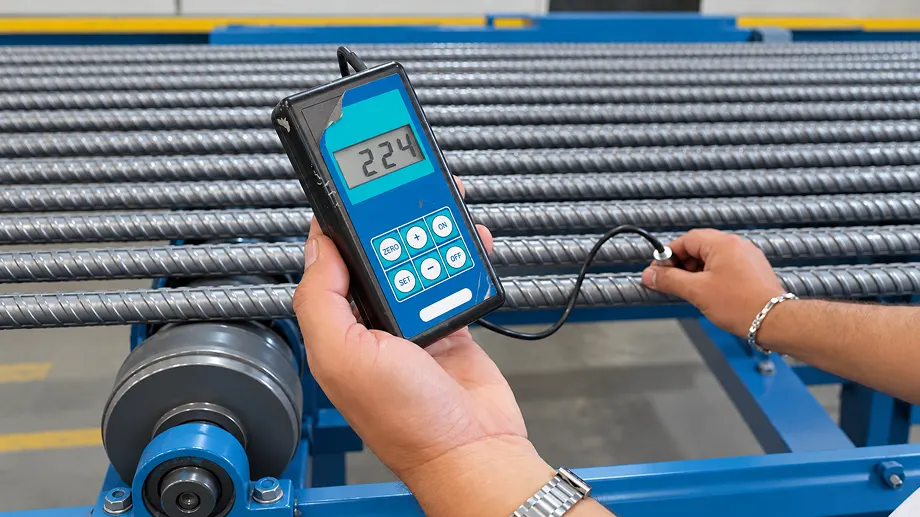
When you buy TMT bars, the first thing you may notice is the size, surface and price. But these alone cannot tell you whether the steel is good enough for your construction.
A good TMT bar should meet the required grade and quality standards, have clear identification, and come with the right testing and certification details. Some checks can be done at the site itself, while others need proper testing.
In India, TMT reinforcement bars are covered under IS 1786:2008, which lays down requirements for different grades of steel bars, including their strength, elongation, dimensions, surface and other quality parameters.
So, before you buy or accept a TMT bar, here are the checks you should know.
What Makes a TMT Bar Good Quality?
A good TMT bar is not simply a bar that looks clean, feels heavy or has prominent ribs.
Its quality is determined by whether it meets the required specifications for its:
- Grade
- Diameter and dimensions
- Yield strength
- Elongation
- Chemical composition
- Surface and deformation characteristics
- Mass
- Bend and rebend performance
These are the parameters covered under IS 1786 testing and certification requirements.
This is also why a visual inspection has limits. You can identify many obvious issues at the site, but some of the most important properties need proper testing.
1. Check the TMT Bar Grade
Start with the grade specified in your structural design. The number in Fe 500 or Fe 550 refers to the specified minimum yield strength in N/mm². Vasuki TMT currently offers:
- Fe 500
- Fe 500D
- Fe 550
- Fe 550D
- Epoxy-Coated TMT Bars
The grade tells you about the strength category of the steel. For example, Fe 500 has a specified minimum yield strength of 500 N/mm² under IS 1786. The “D” designation indicates a higher elongation requirement compared with the corresponding non-D grade.
01
What should you do?
Before buying, check the grade mentioned in your structural requirement and make sure the same grade is supplied.
Do not choose a TMT bar simply because its grade number is higher. The right grade is the one specified for your project.
2. Check the Bar Marking, Grade, and IS 1786
Before buying or accepting TMT bars, check the markings on the bar itself. For BIS-certified TMT bars under IS 1786, the bar should carry permanent identification such as the manufacturer’s brand or trademark, the grade, and the required identification number. These markings are intended to make the steel traceable even if the bundle tag is misplaced.
Next, make sure the grade marked on the bar matches the grade you ordered and check the applicable BIS certification details. The test certificate for BIS-certified IS 1786 material should also carry details such as the Standard Mark, cast or lot number, grade, size, and test results.
When all three match, you have a clear way to verify that the TMT bars delivered to your site are the material you ordered.
3. Inspect the Surface of the TMT Bar
Now, look closely at the steel.
The surface should not have obvious defects such as severe pitting, deep damage, or excessive corrosion. IS 1786 includes requirements relating to freedom from defects and surface characteristics.
Look for:
- Deep pits
- Visible cracks
- Heavy corrosion
- Flaking or damaged areas
- Major surface defects
01
What about rust?
A little surface rust does not automatically mean that a TMT bar is poor quality. Steel can develop surface oxidation during storage.
However, heavy rust, deep pits, or serious surface damage should not be ignored.
When in doubt, get the material checked instead of making a decision only by looking at it.
4. Check the Ribs on the Bar
The raised pattern on a TMT bar is there for a reason. The ribbed surface helps the steel grip the surrounding concrete. BIS includes deformation and surface characteristics among the quality requirements for TMT bars.
When checking the bars, look for a consistent rib pattern along the length of the bar.
You should not see large sections where the ribs are badly formed or visibly damaged.
But remember, a good-looking rib pattern does not prove the strength of the steel. It is only one part of the quality check.
Vasuki also lists a uniform rib pattern among the characteristics of its Fe 550 TMT bars.
5. Check the Diameter and Weight
The TMT bar you receive should match the size ordered for the project.
For example, if your requirement is a 12 mm bar, the supplied material should correspond to that specification.
You can check the diameter with a suitable measuring tool. You can also weigh a sample length of bar as a basic check.
You can use the below table for bar size and weight of TMT bars.
| Bar Size | Approx. Weight per Metre |
|---|---|
| 8 mm | 0.395 kg |
| 10 mm | 0.617 kg |
| 12 mm | 0.888 kg |
| 16 mm | 1.580 kg |
| 20 mm | 2.469 kg |
| 25 mm | 3.858 kg |
One important point – weight alone does not tell you whether the TMT bar is strong or good quality. It is only one part of the inspection.
6. Check the TMT Test Certificate
A test certificate gives you information that you cannot get simply by looking at the bar.
Instead of asking only, “Is this good quality?”, check whether the material has the required test records.
Look for:
| What to Check | What It Tells You |
|---|---|
| Grade | Which grade has been supplied |
| Bar size | Which diameter was tested |
| Cast/Lot number | Which batch do the results belong to |
| Test results | Whether required properties were checked |
| Standard details | Which specification does the material follows |
For IS 1786 certified material, BIS documentation specifies test certificates with the Standard Mark, cast/lot number, grade, size, and corresponding test results.
This is especially useful when you are buying TMT bars in large quantities.
7. Which TMT Quality Tests Matter?
Some quality checks cannot be done just by looking at the steel.
They require proper testing.
The BIS product manual for IS 1786 includes tests covering strength, elongation, dimensions, mass, surface and deformation characteristics, bend and rebend performance, among other requirements.
Here is what they mean in simple terms.
01
Strength Test
02
Elongation Test
This checks how much the steel can stretch. It gives an indication of the bar’s ductility.
03
Bend Test
04
Rebend Test
05
Chemical Testing
This checks whether the steel’s chemical composition falls within the required limits.
These tests are not something a homeowner or contractor can reliably carry out with basic site tools. They require proper testing equipment and procedures.
What Can You Check at the Site?
This is probably the most useful way to look at TMT quality.
You can check yourself:
- Grade marking
- Manufacturer marking
- Bar size
- Surface condition
- Approximate weight
- Bundle details
- Test certificate
Proper testing is needed for:
- Strength
- Elongation
- Chemical composition
- Bend and rebend performance
- Other specified technical properties
So, a site inspection is useful, but it is not a substitute for proper quality testing.
A Simple TMT Bar Quality Checklist
This is probably the most useful way to look at TMT quality.
- Check the grade
Does it match your project requirement? - Check the marking
Is the manufacturer and grade clearly marked on the bar? - Check the standard
Does the material comply with IS 1786? - Check the surface
Any major rust, pitting, cracks or damage? - Check the ribs
Are they consistent and properly formed? - Check the size
Does the diameter match what was ordered? - Check the documents
Does the test certificate match the supplied batch? - Check the test results
Has the required material been tested for the applicable properties?
This gives you a simple way to carry out your first quality check before the steel goes into the structure.
How Vasuki TMT Checks Quality Before It Reaches You
When you are buying TMT for a construction project, you should not have to depend only on your own inspection at the site.
Vasuki offers Fe 500, Fe 500D, Fe 550, Fe 550D and Epoxy-Coated TMT Bars, with its TMT range presented as IS 1786 certified.
Vasuki states that its Fe 500 and Fe 500D bars are manufactured to IS 1786 standards, with the Fe 500D range highlighting ductility, weldability and consistent yield strength.
The BIS certification framework for IS 1786 includes testing and records covering properties such as strength, elongation, dimensions, mass, deformation, bend and rebend performance.
Vasuki TMT goes through the quality checks and testing required for the applicable grade before it reaches you, so you get steel made to meet the required standard and strength specifications.
That means you can inspect your material when it reaches the site, but the quality process starts much earlier.
Quality That Starts Before the Steel Reaches Your Site
Good construction begins with materials you can rely on. When the TMT you buy has the right grade, clear identification and quality checks behind it, you have greater confidence in the steel going into your structure.
Before you buy, check the grade and specifications that your project requires. When the material arrives, check the markings, documentation, and condition of the bars. And when you choose Vasuki TMT, you get a range of TMT bars that goes through the required quality checks before reaching you.
Download the Vasuki TMT Brochure to explore the available grades and specifications.
Have a TMT requirement? Enquire with Vasuki today.
FAQs
How can I check TMT bar quality before buying?
What is IS 1786 in TMT bars?
How do I check the grade of a TMT bar?
Is rust on a TMT bar a sign of poor quality?
Is a heavier TMT bar better?
Looking for Cement Supply or Dealership?
Partner with us for consistent quality, competitive pricing, and dependable delivery.
Looking for Cement Supply or Dealership?
Partner with us for consistent quality, competitive pricing, and dependable delivery.