 88222 82888

What Is Rebar and What Does It Do in Construction?
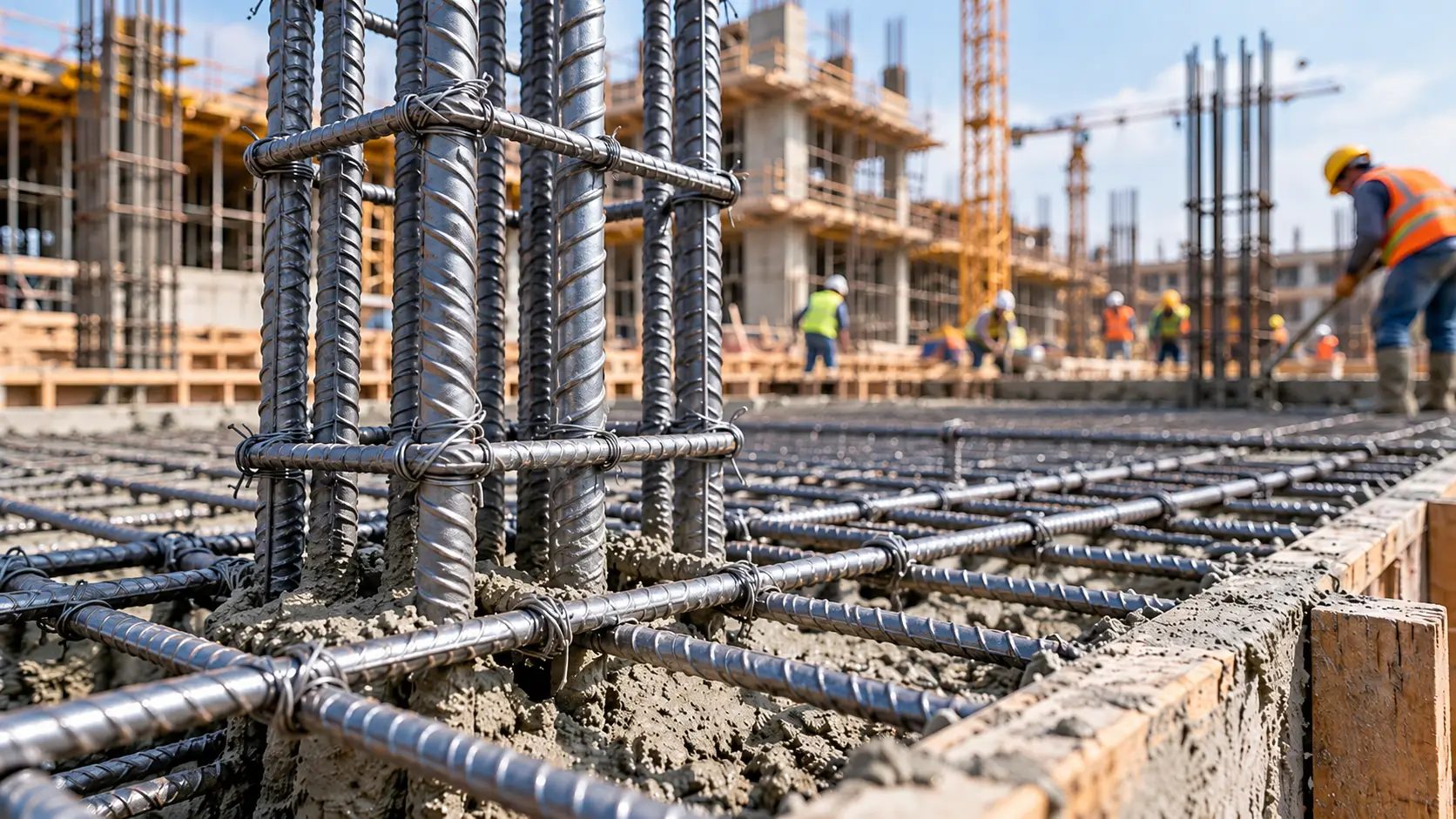
At a construction site, you’ll see steel bars in the foundations, columns, beams, and slabs. These bars help strengthen the structure.
Once construction is complete, most of this steel remains hidden. Yet it has a direct role in how the structure carries loads.
These steel bars are rebar, short for reinforcing bar. Concrete surrounds these bars to help the structure resist pulling and bending forces. Concrete is strong under compression but comparatively weak under tension. Steel reinforcement helps address this limitation and works in a reinforced concrete structure.
Builders use TMT bars to strengthen homes, commercial buildings, and infrastructure in India. To choose the right bars, compare more than just familiar brands and prices. Grade, diameter, ductility, quality standards, and installation all matter.
This guide explains what rebar does in construction, how it works inside concrete, the different types and grades available, and what contractors, builders, and material buyers should check before purchasing reinforcement bars.
What Is Rebar?
Rebar is a steel bar or rod embedded in concrete to provide reinforcement. It is available in different grades, diameters, and surface profiles, depending on the structural application and project specifications.
Reinforcement bars are used in concrete foundations, beams, columns, slabs, retaining walls, and other structural elements. Their purpose is to help the concrete resist forces that it cannot handle as effectively on its own.
01
What Is a Reinforcing Bar Made Of?
Reinforcing bars are manufactured from steel, with their chemical composition and mechanical properties controlled according to the applicable product specifications.
Common characteristics include:
- Grade: Identifies specified mechanical properties, including yield strength and, where applicable, ductility requirements.
- Diameter: Determines the nominal size of the bar and forms part of the structural design.
- Surface profile: Ribbed or deformed bars have raised patterns that help establish a bond with the surrounding concrete.
- Mechanical properties: Tensile strength, elongation, and bend performance affect how the bar behaves under specified conditions.
The selection of these properties depends on the structural design. A bar that suits a small residential slab may not be suitable for a heavily loaded industrial floor or a bridge component.
02
What Is the Difference Between Rebar and TMT Bars?
| Term | Meaning |
|---|---|
| Rebar | General term for steel reinforcement bars used in concrete. |
| TMT bar | A type of reinforcement bar manufactured using a thermo-mechanical treatment process. |
| Reinforced concrete | Concrete containing steel reinforcement designed to work with it. |
What Does Rebar Do in Construction?
01
Helps Concrete Resist Tensile Forces
Concrete performs well when compressed but has relatively low tensile strength. Tension occurs when forces pull a material apart.
Consider a concrete beam supported at both ends. When a load acts on the beam, it bends. When a beam rests on supports at both ends, a downward load pulls its bottom and squeezes its top.
Builders place steel where the design requires it to resist pulling forces. Without enough steel, concrete can crack or fail under heavy loads.
02
Helps Structural Members Resist Bending
Beams and slabs bend under the load of people, furniture, machinery, walls, and other structural components.
Reinforcement is positioned to resist the tension that develops as these members bend. The amount, diameter, and arrangement of steel depend on the expected forces and the structural design.
The reinforcement layout is not the same for every beam or slab. Support conditions, spans, loading, and other design factors affect where bars are required.
03
Supports Load-Bearing Performance
Foundations, columns, beams, and slabs work together to transfer loads through a building and ultimately to the ground.
Reinforcement forms part of this structural system. When builders install it correctly, reinforcement helps concrete structures carry their designed loads.
The steel grade alone does not determine how much load a structure can carry. Concrete strength, member dimensions, reinforcement detailing, connections, and workmanship also affect performance.
04
Helps Control Cracking
Loads, drying, temperature changes, and other factors can crack concrete.
Well-designed reinforcement spreads pulling forces through the concrete and helps limit crack width. It cannot prevent every crack, and steel alone cannot stop structural damage.
Bar spacing, the amount of steel, concrete quality, curing, and exposure all affect crack control.
05
Supports Ductile Behaviour
Ductility means a material can bend or stretch before it breaks. Engineers design and detail reinforcement so structures can deform safely under certain loads.
Earthquake-resistant buildings need structural parts and connections that can handle seismic forces.
Ductile steel alone is not enough. The building’s design, steel placement, and compliance with building codes also affect how it performs in an earthquake.
How Does Rebar Work Inside Concrete?
Rebar works by combining the properties of steel and concrete. Concrete resists compression, while steel reinforcement carries tensile forces.
Concrete bonds with the steel, allowing both materials to work together. When a beam bends, steel resists pulling forces while concrete resists compression.
Three factors help this system work properly.
Bond between steel and concrete: The surrounding concrete grips the reinforcement. Ribs on deformed bars help improve this mechanical bond and transfer forces between the materials.
Concrete cover: Cover is the thickness of concrete between the reinforcement and the exposed surface. It helps protect embedded steel against environmental exposure and fire. The required cover depends on the applicable design and exposure conditions.
Correct placement: Bars must remain in their specified positions during concrete placement. Incorrect spacing, insufficient cover, or displaced reinforcement can affect the structural member’s performance.
These details are part of the approved structural drawings and must be followed during construction.
What Are the Different Types of Rebar?
01
Plain Round Bars
02
Deformed or Ribbed Reinforcement Bars
Deformed bars have raised ribs or patterns on their surface. The ribs help the steel grip the concrete and transfer forces between them.
Builders widely use ribbed reinforcement bars in concrete buildings and infrastructure. Their dimensions, grade, and surface characteristics must conform to the applicable product specification.
03
TMT Bars
TMT means thermo-mechanical treatment. During production, manufacturers heat the steel and cool it in a controlled way. This process gives the bar a strong outer layer and the properties it needs inside.
Builders use TMT bars for many types of construction. Follow the structural engineer’s specifications when choosing a grade. Different projects need different grades.
04
Epoxy-Coated and Corrosion-Resistant Reinforcement
In places where steel may rust, engineers may choose coated or corrosion-resistant bars.
An epoxy coating helps protect steel from moisture, salt, and other substances that can cause rust.
Engineers choose the right bar based on the site, design, standards, and installation needs. Workers must handle coated bars carefully to avoid damaging the coating.
What Do Rebar Grades Mean?
Rebar grades identify specified mechanical properties, including yield strength. In India, IS 1786 sets the standards for high-strength ribbed steel bars and wires used to reinforce concrete.
Understanding Fe 500, Fe 500D and Fe 550
| TMT bar grade | Key characteristic |
|---|---|
| Fe 500 | Offers a specified minimum yield strength of 500 MPa. |
| Fe 500D | Provides a specified minimum yield strength of 500 MPa with more ductility requirements. |
| Fe 550 | Offers a specified minimum yield strength of 550 MPa. |
| Fe 550D | Combines a specified minimum yield strength of 550 MPa with additional ductility requirements. |
| Epoxy-Coated TMT Bars | An epoxy coating helps protect these bars from corrosion in suitable conditions. |
01
What Do the Numbers in a Grade Mean?
The number in a grade shows the steel’s minimum yield strength in megapascals (MPa), as set by the relevant standard. A higher number does not always mean a better choice.
The structural engineer chooses the grade based on the design, project needs, codes, and required steel properties
02
What Is the Difference Between Fe 500 and Fe 500D?
Both grades have a minimum yield strength of 500 MPa. Fe 500D also meets higher ductility requirements.
Ductile steel can bend or stretch more before it breaks. But a building’s earthquake performance also depends on its design, steel placement, connections, concrete quality, and construction.
03
How Should You Select the Right Grade?
Before ordering reinforcement bars, check the following:
- The grade specified in the structural drawings.
- The required bar diameter and spacing.
- The intended application and design loads.
- The supplier’s documentation and conformity with the specified grade.
- The relevant Indian Standard and applicable code requirements.
When comparing TMT bars in Gujarat, start with the project’s approved specifications. Compare price and availability, but don’t change the specified grade without the structural engineer’s approval.
Where Is Rebar Used in Construction?
Reinforcement bars are used in a wide range of concrete structures. Their arrangement changes according to the forces acting on each structural element.
| Application | Role of reinforcement |
|---|---|
| Foundations | Helps resist the forces considered in the foundation design. |
| Beams | Resists tensile forces and bending according to the reinforcement layout. |
| Columns | Works with concrete to carry structural loads. |
| Slabs | Helps resist design loads and control cracking. |
| Retaining walls | Resists forces associated with retained soil and other design loads. |
| Bridges and flyovers | Forms part of a reinforcement system designed for structural loads and environmental conditions. |
| Industrial buildings | Meets the structural requirements of foundations, columns, floors and other reinforced concrete elements. |
For example, a residential slab and an industrial floor may require different reinforcement arrangements because their spans, loads and support conditions differ.
The bar diameter, grade, spacing, lap lengths and placement must follow the approved structural drawings. A general application guide cannot replace project-specific engineering calculations.
How Do You Choose the Right Rebar for a Construction Project?
Choosing the right rebar starts with the project requirements. Contractors, builders, and buyers must check the steel grade, size, quality, and condition before placing an order.
Use this checklist to make a better buying decision.
01
Check the Grade and Diameter in the Drawings
Start with the approved structural drawings and bar bending schedule, if available. Check the required steel grade, bar diameter, quantity, and spacing.
Never change the grade or bar size just because another option costs less or is easier to find. Ask the structural engineer to approve any change before you proceed.
02
Check the Quality Standards
Reinforcement bars used in Indian construction must meet the relevant product specifications. For high-strength deformed steel bars, check compliance with IS 1786 and the applicable certification requirements.
Check the manufacturer’s details and ask for the relevant quality documents. Do not rely on verbal claims alone.
You can visit the Bureau of Indian Standards website to check the relevant standards and certification details.
03
Review the Steel's Properties and Test Reports
Before buying rebar, check the test reports for the grade specified in your project.
Pay attention to these properties:
- Yield strength: Shows the stress at which steel begins to deform permanently.
- Tensile strength: Shows how the steel behaves when pulled.
- Elongation: Measures how much the steel stretches before it breaks during a test.
- Bend and rebend performance: Shows whether the bar can bend without cracking.
Compare the test results with the requirements for your chosen grade. If your project needs a specific level of ductility, make sure the steel meets that requirement.
04
Inspect the Bars and Store Them Properly
Check the rebar when it reaches your site. Look for heavy rust, flaking, damaged bars, mud, oil, and other contaminants.
Light surface rust does not always mean the bar is unusable. However, heavy corrosion or scaling needs closer inspection. If you are unsure about the condition, ask a qualified person to check the steel against the project specifications.
Store the bars on suitable supports instead of placing them directly on the ground. Keep them away from standing water and sources of contamination. Separate and label different grades and diameters to avoid mix-ups during construction.
05
Choose a Reliable Supplier
Good quality and on-time delivery both matter. A reliable supplier provides the right steel grade, clear documents, and the quantities your project needs.
Before ordering, confirm the available grades, bar sizes, quantities, and delivery dates. This is especially important for large projects in Ahmedabad and across Gujarat, where supply delays can slow site work.
Vasuki offers five TMT bar options: Fe 500, Fe 500D, Fe 550, Fe 550D, and epoxy-coated TMT bars. Explore the available range or contact the team to discuss your product and bulk requirements.
Common Mistakes to Avoid When Using Rebar
Buying the right steel is only the first step. Poor handling or incorrect installation can affect how reinforcement performs inside concrete.
Avoid these common mistakes:
- Don’t choose a steel grade without checking the design. A higher grade may not suit every structure.
- Don’t change bar size or spacing without approval. These changes can affect structural strength.
- Keep bars in the right position while pouring concrete.
- Provide the specified concrete cover to protect steel from moisture, corrosion, and fire.
- Store bars away from soil, standing water, and contaminants.
- Don’t bend, cut, weld, or join bars without approval. Follow the approved drawings and procedures.
- Don’t rely on better steel to fix poor workmanship. Correct bar placement, good-quality concrete, and proper curing all matte
The steel, concrete, structural design, and site work must all meet the project requirements.
Why Rebar Quality Matters for Long-Term Construction
Rebar stays inside concrete for the life of a structure. Its quality and placement help the structure handle loads and weather.
Steel that meets the required specifications gives the structure the strength and flexibility the engineer needs. Consistent bar dimensions and proper bonding with concrete also help the reinforcement do its job.
Protection against corrosion matters too. The right concrete cover, good concrete quality, and proper construction practices help protect the steel from moisture and other harmful conditions.
Builders and buyers should also keep product test reports and quality documents. These records help them confirm what they bought and maintain clear project records. Inspecting the steel before installation also helps identify problems early.
No steel grade or brand can guarantee a crack-free building or prevent every form of damage. Long-term performance depends on the design, materials, installation, and quality of construction.
Conclusion: Choose Rebar That Meets Your Project's Requirements
Rebar helps concrete structures resist tension and bending. The right choice depends on the required grade, bar diameter, mechanical properties, and placement.
Before you buy reinforcement bars, check the structural drawings, review the quality documents, and make sure the supplier can meet your needs. Price matters, but the steel must match the approved design.
Explore Vasuki TMT Bars to review Fe 500, Fe 500D, Fe 550, Fe 550D, and epoxy-coated options. You can also contact the team to discuss your product or bulk order requirements.
FAQs
What Is Rebar in Construction?
Why Do We Use Rebar in Concrete?
What’s the Difference Between Rebar and TMT Bars?
What Are the Different Types of Rebar?
What Are Common Rebar Grades in India?
Looking for Cement Supply or Dealership?
Partner with us for consistent quality, competitive pricing, and dependable delivery.
Looking for Cement Supply or Dealership?
Partner with us for consistent quality, competitive pricing, and dependable delivery.