 88222 82888

Top 5 Reasons Why Cracks Appear in Concrete and How to Prevent Them
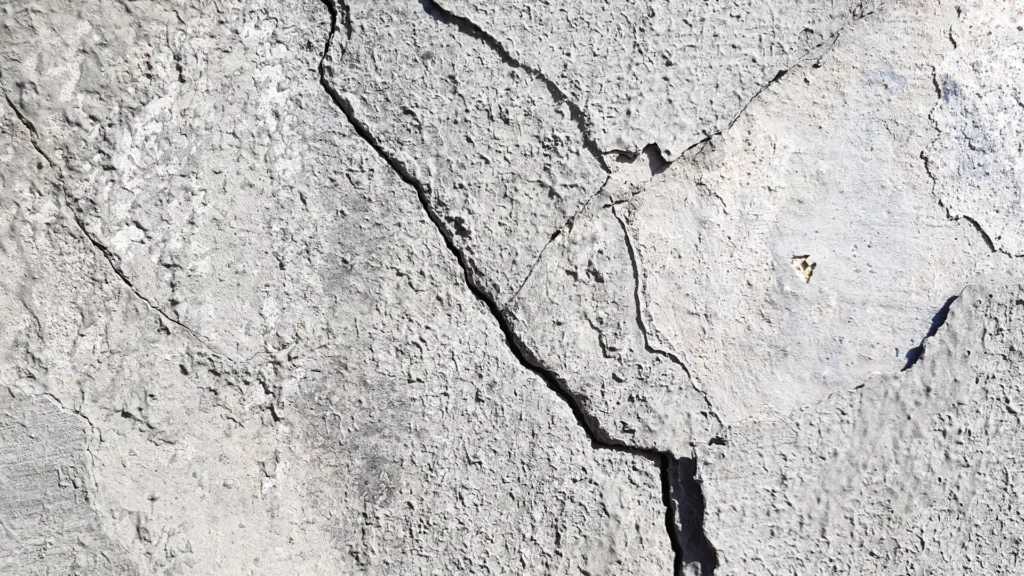
A crack running along the wall just above the window. This is one of the most frustrating experiences for homeowners, and honestly, for engineers too, because by the time the crack appears, the mistake that caused it was made during construction, often months before.
Concrete doesn’t crack randomly. Every crack has a reason, and most of those reasons trace back to decisions made at the mix stage, the pour stage, or the days immediately after. Understanding those decisions is what separates a structure that holds for 30 years from one that starts showing stress in year one.
This article is for two kinds of people: the homeowner who is building or has already built and wants to understand what went wrong or how to protect what’s left, and the civil engineer or contractor who wants a honest look at where site practices fall short. Both of you deserve straight answers, not vague construction advice.
Why Concrete Cracks?
Concrete is excellent under compression. You can stack enormous weight on it. But it is relatively poor at handling tension, the kind of internal pulling force that happens when it shrinks, when it bends, or when the ground underneath it shifts.
When that tensile stress gets large enough, the concrete doesn’t stretch. It splits.
The main question here is what creates those stresses in the first place. There are five main causes, and at least four of them are entirely within your control.
01
Too Much Water Was Added to the Mix
This is the most common cause of concrete cracking in India, and it almost never gets acknowledged on site.
Here is what happens in practice. The truck arrives with the mix. The workability isn’t quite right, the concrete feels stiff, so someone adds water to make it easier to spread and finish. It seems like a small thing. It is not.
Every extra litre of water beyond what the mix design specifies increases the water-to-cement ratio. As that excess water evaporates after the concrete sets, it leaves behind tiny voids inside the hardened structure. This makes the concrete porous, weaker, and far more prone to shrinkage. The concrete literally pulls itself apart from the inside as it dries.
The finished surface may look fine for months. But during the first summer heat cycle or after water absorption during monsoon season, those internal stresses show up as cracks.
What to do instead:
If the mix feels stiff, the answer is not more water. The answer is a plasticizer or superplasticizer, which improves workability chemically without changing the water content. On a properly designed project, workability should be built into the mix design, not added at the site on impulse.
Also, make sure your ready-mix supplier or site batch plant is following the approved mix design, and that no water is being added during transit or at the pour point. This needs to be a site rule, not a suggestion.
02
The Surface Dried Out Before the Concrete Had Set
Picture a freshly poured slab on an April afternoon in Gujarat. The sun is high, there is a dry westerly wind, and the temperature is pushing 40 degrees. The surface of the concrete starts losing moisture faster than the interior can replace it.
This is called plastic shrinkage, and it happens before the concrete has even hardened. The surface contracts while the core is still soft and cannot resist. Cracks form within the first two to six hours of placement, sometimes even before the finishing crew has left the site.
These cracks are often wide and random in pattern. They go by different names, map cracking, crazing, surface cracking, but they all come from the same place: the top drying too fast.
The frustrating part is that this is almost entirely a weather and timing problem. The concrete itself may be perfectly designed, but if no one thought about evaporation conditions before the pour, the damage is done within hours.
What to do instead:
Avoid concrete pours during peak afternoon heat in summer. Early morning pours give you better control. Use windbreakers or shade structures on exposed slabs. Apply an evaporation retarder (a simple spray-on liquid that slows surface moisture loss) immediately after screeding. And have your curing process ready to begin the moment finishing is done, not an hour later.
03
Curing Was Done Poorly or Skipped Entirely
If there is one step in concrete construction that gets consistently underestimated, it is curing. Most homeowners don’t know it exists. Many contractors treat it as optional. It is neither.
When cement reacts with water, it undergoes hydration, a chemical reaction that produces the crystalline structure that gives concrete its strength. This reaction takes time and needs moisture to continue. If the concrete dries out too quickly after placement, hydration stops early and the concrete never reaches its intended strength.
A slab cured for only two or three days can end up with 30 to 40 percent less strength than the same mix cured properly for seven days. You paid for M25 concrete. Poor curing can give you something closer to M15 in performance.
Weaker concrete cracks more easily under load, under thermal stress, and under the kind of routine ground movement that a properly cured slab would handle without issue.
What to do instead:
Curing should last a minimum of seven days for standard concrete work. For structural elements like columns, beams, and foundations, 14 to 28 days is appropriate. Use wet gunny bags kept continuously moist, or apply a spray-on curing compound if wet curing is not practical. Ponding water on flat slabs is also effective. Whatever method you choose, do not let the surface go dry for the entire curing period.
This is not expensive. It mostly costs attention and discipline.
04
Control Joints Were Missing or Placed in the Wrong Locations
Concrete shrinks as it cures. This is normal and unavoidable. A concrete slab does not shrink uniformly; it is restrained at edges, at columns, and by friction with the subgrade. That restrained shrinkage creates tension, and when the tension builds up with no planned release point, the slab cracks wherever it finds a weak spot.
Control joints are grooves cut or formed into the concrete at regular intervals, giving the concrete a predefined location to crack. Instead of a random fracture running across the middle of your floor, the crack happens inside the joint, where it is controlled, hidden, and easy to seal.
In residential construction, control joints are frequently skipped because they add a step and break the visual continuity of the surface. In larger commercial or infrastructure projects, they are sometimes placed at incorrect intervals or cut too shallow to be effective.
What to do instead:
For floor slabs, control joints should be spaced at intervals roughly 24 to 36 times the slab thickness. For a 125mm slab, that means joints every 3 to 4.5 metres. Joints should be cut to at least one quarter of the slab depth. Saw cutting should happen within 6 to 12 hours of placement. On walls, control joints should be placed at re-entrant corners and at regular intervals along long runs. Plan joint locations before the pour, not after.
05
The Slab Was Loaded Before It Was Ready, or the Ground Beneath Was Never Prepared Properly
This one catches both homeowners and contractors off guard.
Concrete gains strength over time, not all at once. At 24 hours, it may have reached 20 percent of its design strength. At 7 days, around 65 to 70 percent. Full design strength comes at 28 days. When heavy equipment, stacked materials, or vehicle loads are placed on freshly cast concrete before it has gained adequate strength, the slab bends under stresses it cannot yet resist. Cracks form at mid-span, at re-entrant corners, or wherever the bending moment is highest.
The other half of this problem is what is underneath the slab. Poorly compacted soil, soil with variable density, or soil that has been saturated with water will settle unevenly after the slab is poured. This differential settlement causes the slab to span unsupported areas, bending under its own weight and any loads above it. The result is structural cracking that no amount of surface treatment will fix.
What to do instead:
Do not allow any significant load on a slab until it has cured for at least 7 days, and keep heavy equipment and loaded trucks off it until 28-day strength is reached. For the subgrade, get a proper soil investigation done before foundation and slab design. Compact the subgrade in layers and verify it with field density tests. If the soil is expansive or poorly draining, address that with engineered fill or drainage before pouring anything on top of it.
Structural Cracks vs. Non-Structural Cracks: How to Tell the Difference
Not every crack is an emergency, but dismissing cracks without understanding them is a mistake.
Non-structural cracks are usually narrow, typically less than 0.3mm wide, and stay the same size over time. They appear from shrinkage, surface drying, or minor thermal movement. A hairline crack in a plastered wall or fine surface crazing on a driveway falls into this category. They do not affect the strength of the structure, though they should be sealed to prevent water ingress.
Structural cracks are wider, often greater than 0.5mm, and tend to be progressive, meaning they grow. They may appear diagonally at corners of openings, or as wide splits in beams, columns, or slabs. Sometimes you will see deflection alongside the crack, meaning the element is visibly bending or sagging. These cracks indicate that the structural element is being overstressed. They require a structural engineer’s assessment, not just filler and paint.
A simple way to monitor cracks: stick a small piece of paper across the crack with adhesive on both sides and check it after a few weeks. If the paper tears, the crack is active and growing. If it stays intact, the crack has stabilised.
What You Can Control
Most of the causes above come down to a few consistent themes:
The mix design should be followed as specified. Water additions on site are one of the most destructive habits in Indian construction and they need to be treated as a quality failure, not a convenience.
Curing is structural work, not finishing work. Budget for it, schedule it, and verify it is being done.
Timing matters. Pours in extreme heat or wind require active mitigation measures, not optimism.
Ground preparation is not optional for slabs. If the soil underneath is not right, the slab above will not stay right for long.
For homeowners building in Gujarat, the local climate adds particular pressure on fresh concrete. High temperatures, intense sun, and the alternating wet and dry cycles of monsoon season all stress concrete in ways that demand better materials and tighter site control. This is why the quality of cement you start with matters more than many people realise.
Vasuki Cement, produced for Gujarat’s specific construction conditions, gives builders a consistent, reliable base to work from. When your cement has uniform fineness, predictable setting characteristics, and dependable strength development, it is easier to design and execute a mix that performs the way it is supposed to. That consistency does not solve poor site practices on its own, but it removes one significant variable from an already demanding process.
To Sum Up
Concrete cracks because of choices made before anyone noticed a problem. Excess water at the pour. Skipped curing. A control joint that was never cut. Soil that was never properly compacted. These are not mysterious failures; they are traceable, preventable decisions.
The cracks you see a year after construction are the bill for what happened during it.
If you are building now, use the right mix design, protect fresh concrete from the elements, cure it properly, plan your joints, and prepare your ground. If you are already dealing with cracks, get a professional to assess whether they are structural before you reach for the filler.
Good concrete does not happen by accident. It is the result of the right materials, followed by disciplined execution at every stage. Start with both, and you will not be staring at cracks a year from now wondering what went wrong.
FAQs
What is the most common cause of cracking in concrete?
Does the quality of cement affect how many cracks concrete cracks?
How long should concrete be cured to avoid cracking?
What is the white powder that sometimes appears around cracks?
Why do cracks keep coming back even after repair?
Looking for Cement Supply or Dealership?
Partner with us for consistent quality, competitive pricing, and dependable delivery.
Looking for Cement Supply or Dealership?
Partner with us for consistent quality, competitive pricing, and dependable delivery.