 88222 82888

Which Cement is Best for House Construction? A Complete Guide for Homeowners
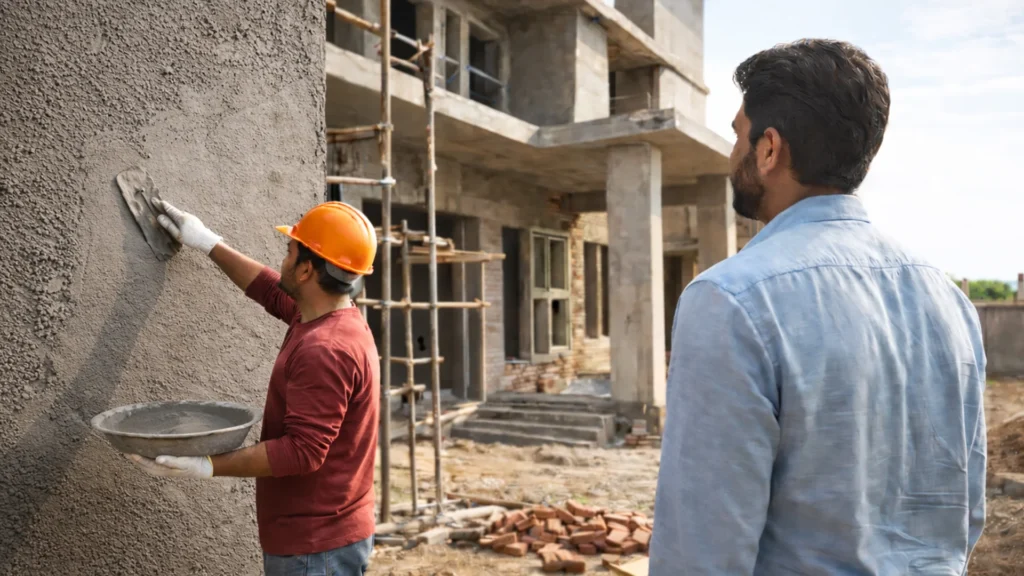
Building a home involves hundreds of decisions, but very few are as foundational as the choice of cement. In house construction, cement is not just another material that goes into the mix. It is the element that binds everything together and directly influences the strength, durability, and lifespan of the structure. While many homeowners tend to focus on visible aspects like design, tiles, or finishes, the real performance of a home depends on what lies beneath and within the walls.
This guide is designed to give you a clear and practical understanding of cement in house construction so that you can make informed choices without relying on assumptions or market noise.
Understanding the Role of Cement in House Construction
Cement acts as a binding agent that combines with sand, aggregates, and water to form concrete and mortar. These mixtures are used across different stages of house construction, including foundations, structural frameworks, masonry, and finishing work.
The quality of cement affects how well concrete sets, how strong it becomes over time, and how resistant it is to environmental factors such as moisture and temperature changes. Poor quality or incorrectly used cement can lead to cracks, seepage, and long-term structural issues, while the right choice contributes to stability and longevity.
Types of Cement Used in House Construction
01
Ordinary Portland Cement (OPC)
OPC (Ordinary Portland Cement) is widely used in structural work because it offers high early strength and faster setting time. It is available in different grades such as 33, 43, and 53 grades, and the selection of grade depends on structural design requirements, with higher grades like 53 used where early strength is critical.
- Suitable for columns, beams, and slab casting
- Provides high initial strength
- Useful where faster construction progress is required
Key Points to Take Care of :
- Produces high heat during setting, which can cause cracks in large pours, ensure
proper water curing. - Avoid using OPC alone for mass concreting like large foundations or raft slabs
without expert guidance. - Higher grade (like 53) should be used only as per structural design not blindly
everywhere.
02
Portland Pozzolana Cement (PPC)
Portland Pozzolana Cement (PPC) contains fly ash, which improves workability and enhances long-term durability. It generates less heat during hydration, which helps reduce the risk of cracks.
- Suitable for plastering and masonry
- Offers better long-term strength development
- Improves resistance to cracking and shrinkage
Key Points to Take Care of :
- Gains strength slowly avoid using it where early strength is required (like quick form
work removal). - Ensure proper curing time; do not rush construction timelines.
- Ideal for general construction, but confirm with your engineer for structural RCC use.
03
Portland Slag Cement (PSC)
Portland Slag Cement (PSC) includes slag, which makes it more resistant to chemical attack and moisture. It is often used in environments where durability is a priority.
- Suitable for foundations and damp areas
- Provides improved resistance to aggressive conditions
- Enhances long-term durability
Key Points to Take Care of :
- Ensure consistent curing, especially in the early days, to achieve full durability
benefits. - Slower strength gain means longer setting time; plan construction schedules
accordingly.
In practical house construction, engineers often recommend using a combination of these types depending on the stage of construction rather than relying on a single type throughout.
How to Choose the Right Cement for Your House Construction
Selecting cement should be a structured decision based on application, cement quality, and handling rather than brand recall alone.
- Choose cement based on its use, with OPC preferred for structural elements and PPC or PSC for plastering and durability-focused areas
- Check the manufacturing date because cement loses strength over time and is best used within a few months of production
- Ensure the presence of certification marks such as ISI, which indicate compliance with quality standards
- Verify packaging details, including batch number and manufacturer information
- Pay attention to storage conditions, as exposure to moisture or improper stacking can reduce effectiveness
Consistency across batches is equally important because uniform performance ensures predictable results throughout the construction process.
Where Cement Impacts House Construction the Most
- Foundation work depends on cement for load-bearing capacity and resistance to soil conditions
- Columns and beams rely on cement for structural strength and stability
- Slabs require cement that supports durability and minimizes cracking
- Masonry uses cement for bonding strength between bricks or blocks
- Plastering depends on cement for finish quality and surface durability
Common Questions Homeowners Have About Cement
01
Which cement is best for roof slabs
OPC 53 grade is commonly used because it provides the strength required for structural elements.
02
Can one type of cement be used for the entire house
03
Does higher cost indicate better quality
04
Which cement helps reduce cracks
05
How can cement quality be checked on-site
- It should feel smooth when touched and not contain lumps
- It should have a uniform color
- It should not show signs of moisture exposure or hardening
Mistakes to Avoid in House Construction
Many construction issues arise from avoidable errors rather than material limitations.
- Using old or improperly stored cement reduces strength and performance
- Ignoring correct mix ratios affects the integrity of concrete and mortar
- Inadequate curing leads to cracks and reduced durability
- Selecting cement based only on cost without considering application results in poor outcomes
Cement may account for a relatively small portion of the total house construction cost, but it has a disproportionate impact on structural quality and long-term performance.
The Importance of Choosing a Reliable Cement Brand
Beyond technical specifications, reliability and consistency play a crucial role in house construction. Builders and homeowners benefit from using cement that performs predictably across different applications and conditions.
With Vasuki Cement, the focus is not just on meeting standards but on delivering uniform performance that supports both structural strength and finishing requirements. This kind of reliability becomes especially valuable in house construction, where multiple stages depend on consistent material behavior.
Final Thoughts
House construction is a long-term investment, and the decisions made during the early stages have lasting consequences. Cement, although often overlooked in favor of more visible elements, is one of the most critical components of the entire process.
Choosing the right cement involves understanding its role, selecting the appropriate type for each stage, and ensuring quality through proper handling and storage. When approached thoughtfully, this decision contributes to a home that remains strong, stable, and durable over time.
A well-built house is not defined only by how it looks when completed but by how it performs for years to come. Cement plays a central role in that performance, which is why it deserves careful consideration in every house construction project.
FAQs
Which cement is best for house construction?
What is the difference between OPC and PPC cement for house construction?
How much cement is required to build a house?
Should I buy cement in bulk for house construction?
Which cement brand is best for house construction in Gujarat?
Looking for Cement Supply or Dealership?
Partner with us for consistent quality, competitive pricing, and dependable delivery.
Looking for Cement Supply or Dealership?
Partner with us for consistent quality, competitive pricing, and dependable delivery.